
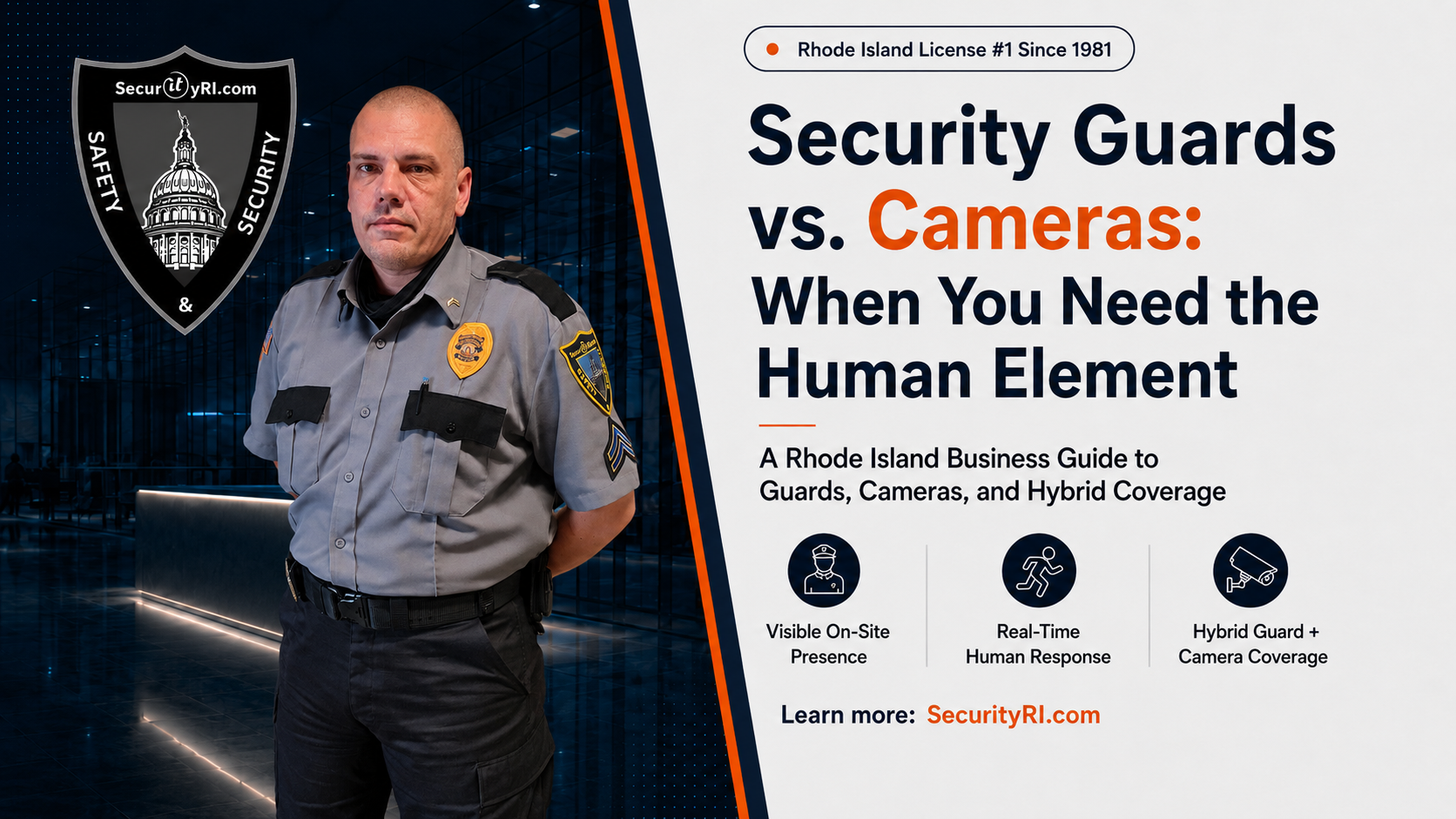
Security Guards vs. Cameras: When You Need the Human Element
A Rhode Island Business Guide to Guards, Cameras, and Hybrid Coverage
Cameras can watch every angle of your property around the clock. They cannot walk a lobby, check an ID, or step between two people about to fight. Knowing where that line sits is the difference between a security plan that looks good on paper and one that actually protects your business.
 Guard
Guard
 Camera
 Hybrid
What Only a Human Guard Can Do
Modern AI surveillance has come a long way. Today’s cameras include real-time alerts, facial recognition, and behavior analytics that flag unusual activity as it happens, not the next morning. For a Rhode Island warehouse, parking lot, or secondary entrance, that kind of constant, unblinking coverage is hard to beat, and it never calls in sick.
But a camera can only tell you something happened. A guard can stop it from happening, or respond while it is still happening. That distinction matters most in situations that require judgment, presence, or physical action.
- Verifying identity and denying entry when something does not add up
- De-escalating a tense situation before it turns physical
- Physically removing a trespasser or stopping theft in progress
- Giving employees and visitors real reassurance, not just a lens on a wall
None of this is an argument against cameras. It is an argument for knowing which problem you are actually trying to solve before you buy a solution.
Guards, Cameras, or Hybrid: Where Each One Fits
Most Rhode Island businesses do not need to pick one and abandon the other. The right question is where each one fits your property.
Cameras Alone
Best for low-traffic areas, parking lots, and secondary entrances where constant coverage matters more than physical response.
- Constant coverage, no staffing gaps
- Real-time alerts and behavior analytics
- Cannot physically intervene
- Lowest cost option
Guards Alone
Best for lobbies, active sites, and high-risk hours where someone needs to verify, intervene, or respond in person.
- Can verify identity and de-escalate
- Physical presence and intervention
- Limited to hours actually staffed
- Higher cost for 24/7 coverage
Hybrid Coverage
What most SecurityRI clients end up choosing. Cameras and officers working as one program, not two separate products.
- Cameras cover secondary areas and off-hours
- Officers focus on entry points and peak-risk times
- Often costs less than 24/7 guard staffing alone
- Every alert paired with an officer response
What we’re seeing across Rhode Island: five years ago, most of our conversations with property owners started as either “we want a guard” or “we want cameras,” treated as competing options. That framing has mostly disappeared. AI camera systems got good enough to handle real-time alerting reliably, which freed officers up to spend their hours on the parts of the job a camera was never going to do anyway. The businesses getting the most value out of their security spend right now are the ones that stopped comparing guards to cameras and started asking what job each one is actually suited for.
Licensed & Insured
RI License #1 holder since 1981
24/7/365 Live Dispatch
A real person answers from North Providence around the clock
GPS Tracked Accountability
Verify coverage in real time, not just trust it
Rapid Deployment
Standard accounts live within 24 to 48 hours
Scenarios Where the Human Element Matters Most
Ask yourself these questions about your property. If the answer points to a person, not a lens, that is where a guard belongs.

How We Actually Think Through This
Walk the Property First
Before recommending anything, we look at how people actually move through the space: entry points, sightlines, blind spots, and the hours nobody is around.
Separate the Risks From the Habits
A lot of security requests are inherited from whatever the last provider sold, not from an actual risk profile. We try to untangle the two before recommending anything.
Match the Tool to the Job
Cameras where constant coverage matters most, officers where judgment and physical presence matter most, and an honest answer if you need neither yet.
Revisit It as the Property Changes
A coverage plan that made sense a year ago may not fit today’s traffic, tenants, or incident history. We treat the mix as something to adjust, not set once and forget.
Still Weighing Guards vs. Cameras for Your Property?
Happy to walk through what we’re seeing on properties like yours, no pressure, no canned pitch. If it turns into an assessment, great. If it just answers your question, that’s fine too.
Guards vs. Cameras Questions, Answered
Can cameras completely replace a security guard?
Cameras are excellent at recording and alerting, but they cannot physically intervene, verify a visitor’s identity, de-escalate a confrontation, or make a judgment call in the moment. For most Rhode Island properties with active foot traffic or higher risk exposure, cameras work best paired with a live officer rather than as a standalone replacement.
Is a hybrid security model more expensive than guards alone?
Not usually. A hybrid approach often costs less than staffing guards around the clock, because AI cameras can cover lower-risk hours or secondary entrances while officers focus on the times and areas that need a physical presence.
How do I know if my Rhode Island business needs a guard, cameras, or both?
It comes down to foot traffic, hours of operation, past incidents, and what needs to happen if something goes wrong. SecurityRI offers a free security assessment to evaluate your property and recommend the right mix.
Are SecurityRI’s AI cameras monitored by a person?
Yes. Our AI surveillance systems are configured in-house by our certified security technology team, with facial recognition and behavior analytics, and every alert is paired with an officer response rather than a notification nobody sees until the next day.
What does a hybrid security program cost compared to guards alone?
Pricing depends on your property, but hybrid programs typically cost less than staffing officers around the clock, since cameras absorb coverage during lower-risk hours while officers are scheduled where and when they matter most.
Have a Property-Specific Question?
Every property is different, so if the general breakdown above did not quite answer your situation, reach out. We will give you a straight answer, whether or not it leads to an assessment.
