Mobile security trailer at Rhode Island retail parking lot - SecurityRI

Illegal Dumping & Loitering Security | SecurityRI

Rhode Island License #1 Since 1981 • Field Case Study

Stopping Illegal Dumping and Loitering at a Rhode Island Retail Lot

A Live Officer and an AI-Powered Trailer, Working the Same Lot

An AI-powered mobile security trailer records the lot around the clock. A live officer walks it during business hours, tagging vehicles, enforcing posted rules, and giving shoppers someone real to talk to. Here’s what that combination actually looks like in the field.
24/7 AI Trailer Coverage
Live On-Site Officer
#1 Licensed in RI
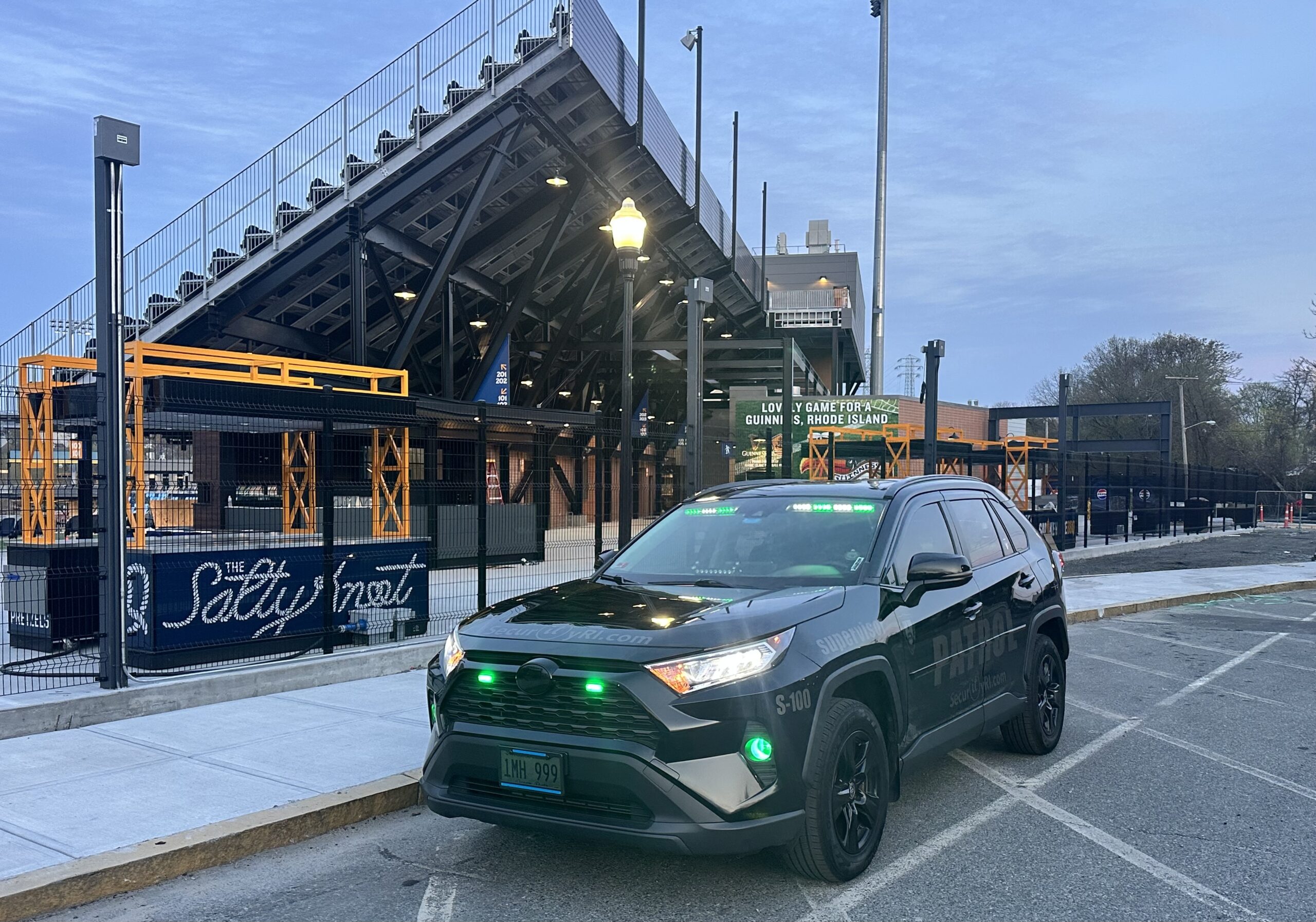
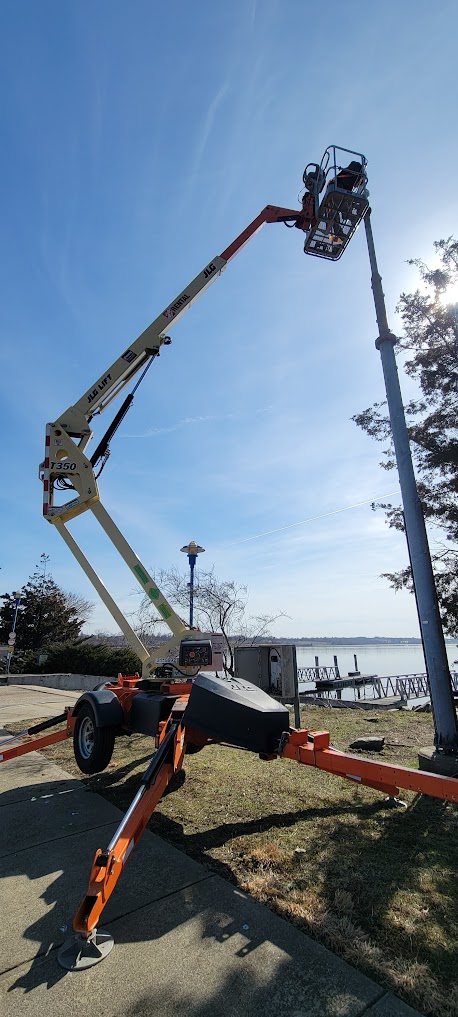
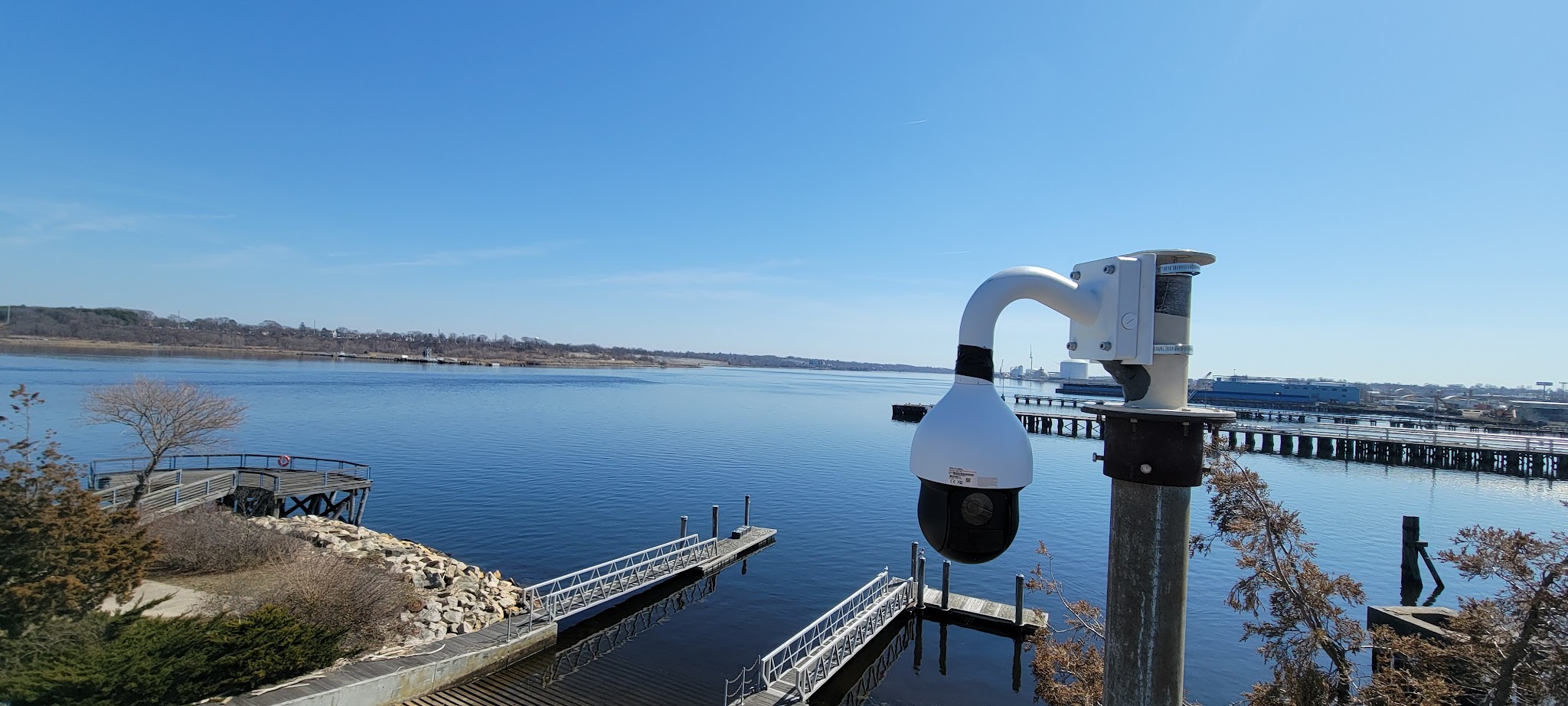
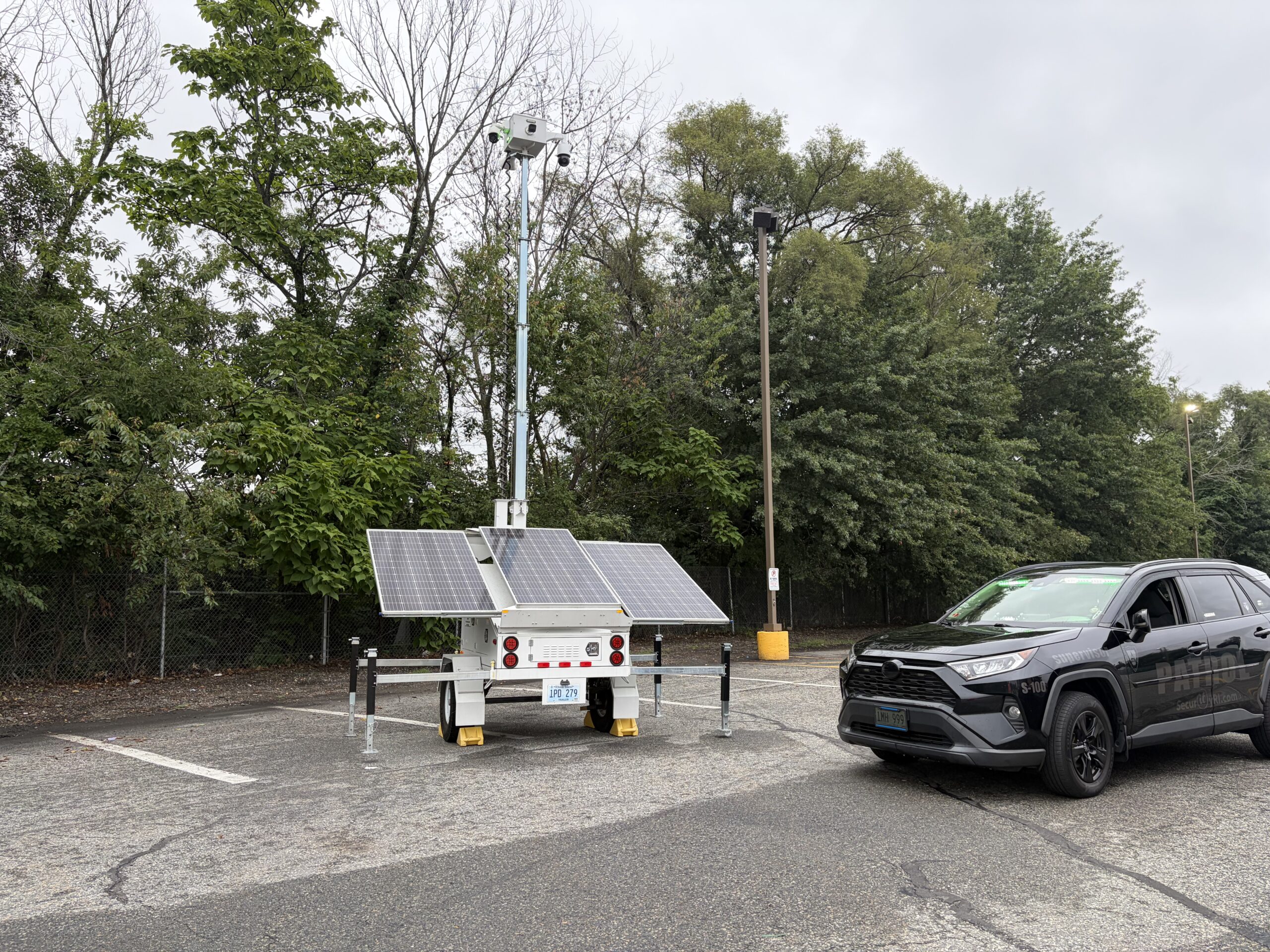
SecurityRI solar-powered mobile security trailer deployed at a Rhode Island retail parking lot capturing AI surveillance footage

Quick answer: Stopping illegal dumping and loitering at a Rhode Island retail lot works best with two tools doing different jobs, not one tool doing both. An AI-powered mobile security trailer records the lot around the clock and captures usable evidence of dumping the moment it happens. A live officer works the lot during business hours to tag violating vehicles, break up loitering in person, and give shoppers someone real to talk to. Neither replaces the other.

AI Trailer

Continuous footage of the lot, day and night

Live Officer

On-site during business hours for direct enforcement

Vehicle Tagging

Officers flag and log vehicles that violate lot rules

Shopper Reassurance

A visible, approachable presence customers actually notice

In The Field

What Hybrid Coverage Looks Like on This Lot

SecurityRI runs a solar-powered AI mobile trailer around the clock and pairs it with a live officer during operating hours. The two roles aren’t redundant, they’re covering different problems.

AI Motion & Vehicle Detection

Real-time detection across the full lot, including the hours nobody is scheduled to walk it.

  • Motion, people, and vehicle detection
  • Customizable alert zones
  • After-hours coverage of blind corners

Illegal Dumping Deterrence

Recorded evidence of dumping as it happens, not discovered the next morning.

  • Strobe lighting and audio deterrence
  • Footage usable for trespassing notices
  • Patterns flagged for repeat offenders

Direct Enforcement

Officers tag vehicles overstaying or violating posted lot rules, in person.

  • Vehicle tagging and logging
  • Documentation for towing decisions
  • Enforcement of posted lot rules

Loitering Response

A person walking over and having a direct conversation, not just a recorded alert.

  • In-person de-escalation
  • Direct engagement, not just observation
  • Prevents patterns from becoming habits

Real-Time Alert Routing

AI alerts route to SecurityRI’s monitoring center and, during staffed hours, straight to the officer on-site.

  • 24/7/365 monitoring center
  • Immediate on-site follow-up
  • Coordinated response protocols

Visible Presence

Shoppers and staff notice a real officer on the lot, not just a camera pole.

  • A face customers can approach
  • Reassurance beyond signage
  • Deters incidents before they start
Why It Works

Why Neither Piece Works as Well Alone

The same principle applies here as when comparing security guards versus cameras generally, but a retail lot makes the tradeoff concrete.

  • The trailer’s AI surveillance system catches the 2 a.m. dumping run that no officer is scheduled to see
  • Footage doesn’t resolve a car parked in a fire lane for three hours, a person walking over does
  • The mobile trailer turns a generic patrol into a targeted one
  • Officers work off what the trailer is already flagging, not a fixed walking loop
  • Every alert is paired with an officer response, not a notification nobody sees until morning
Request Free Assessment
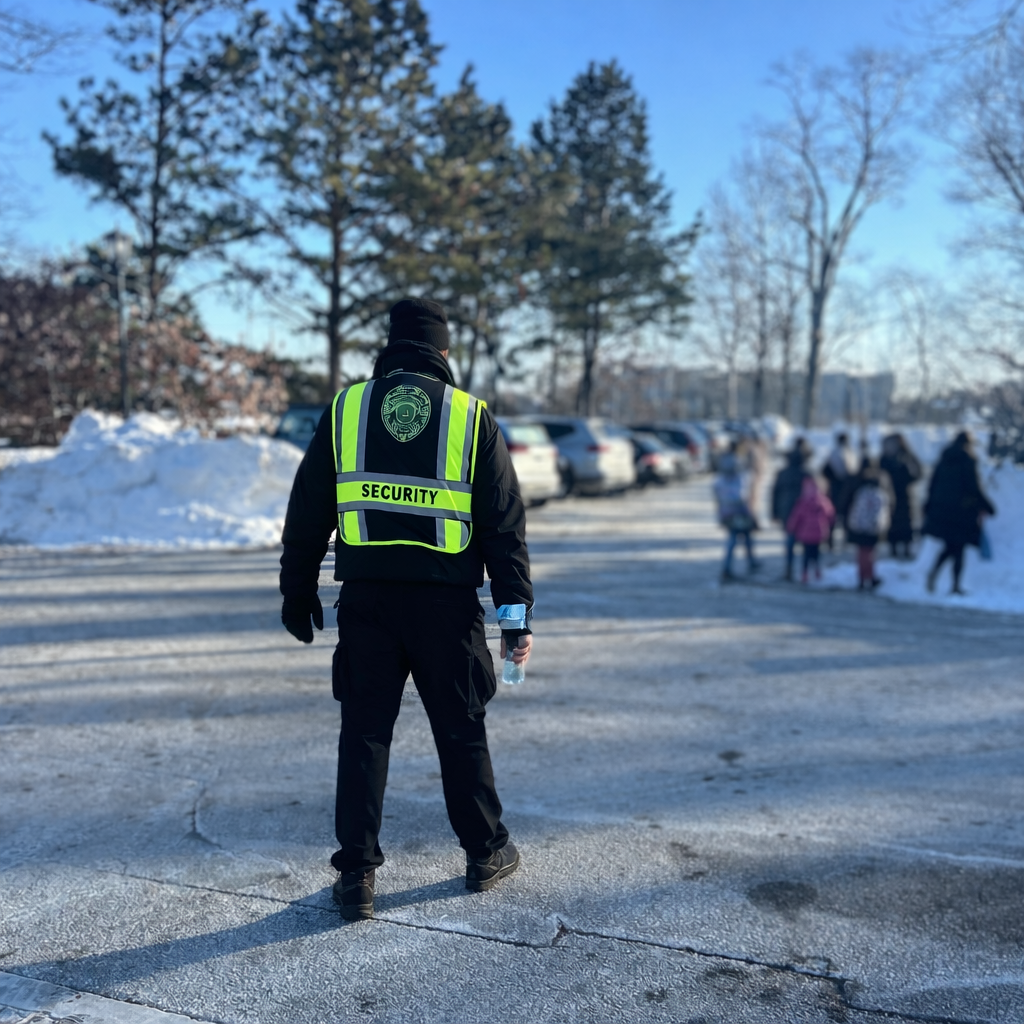
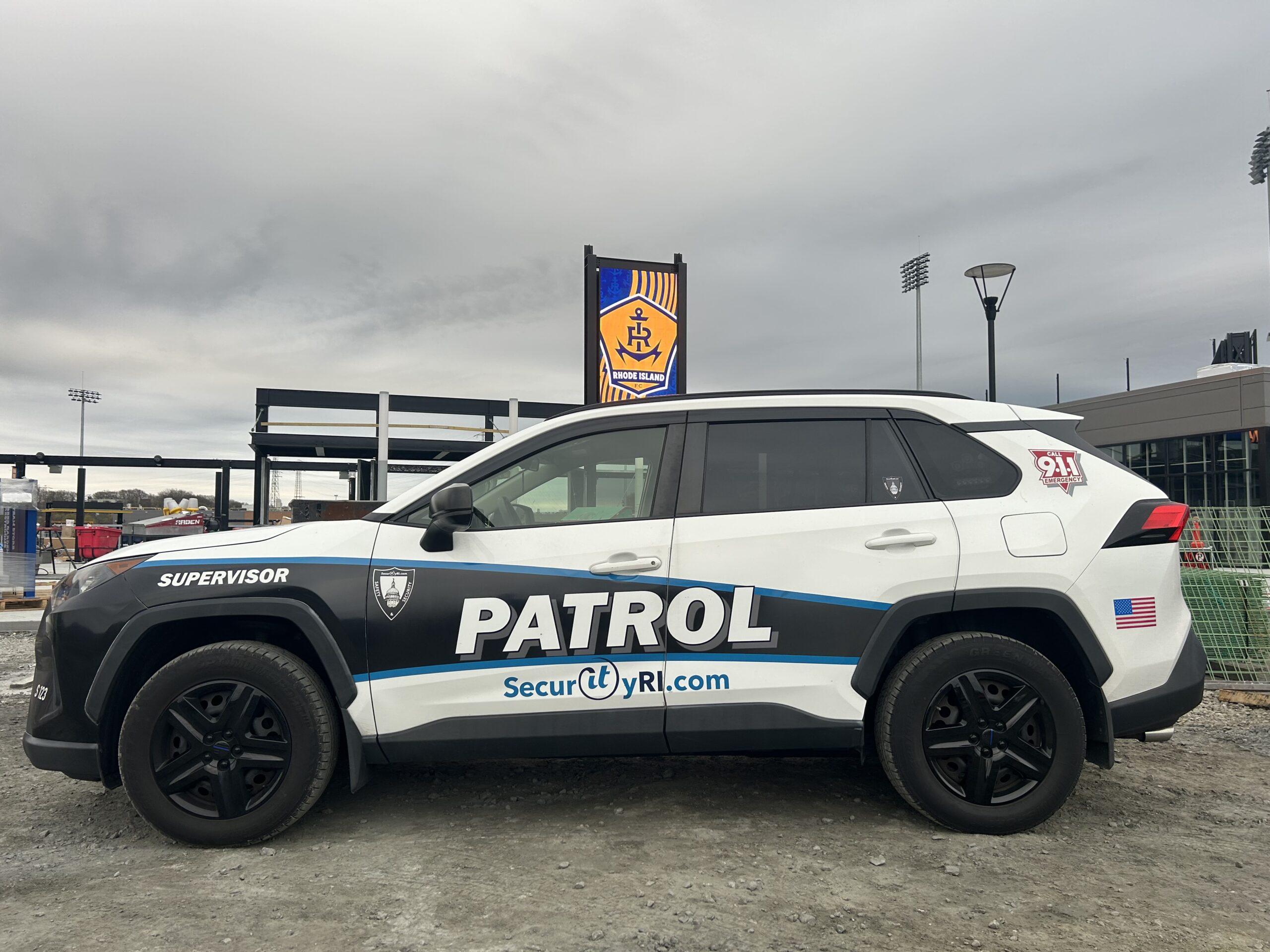
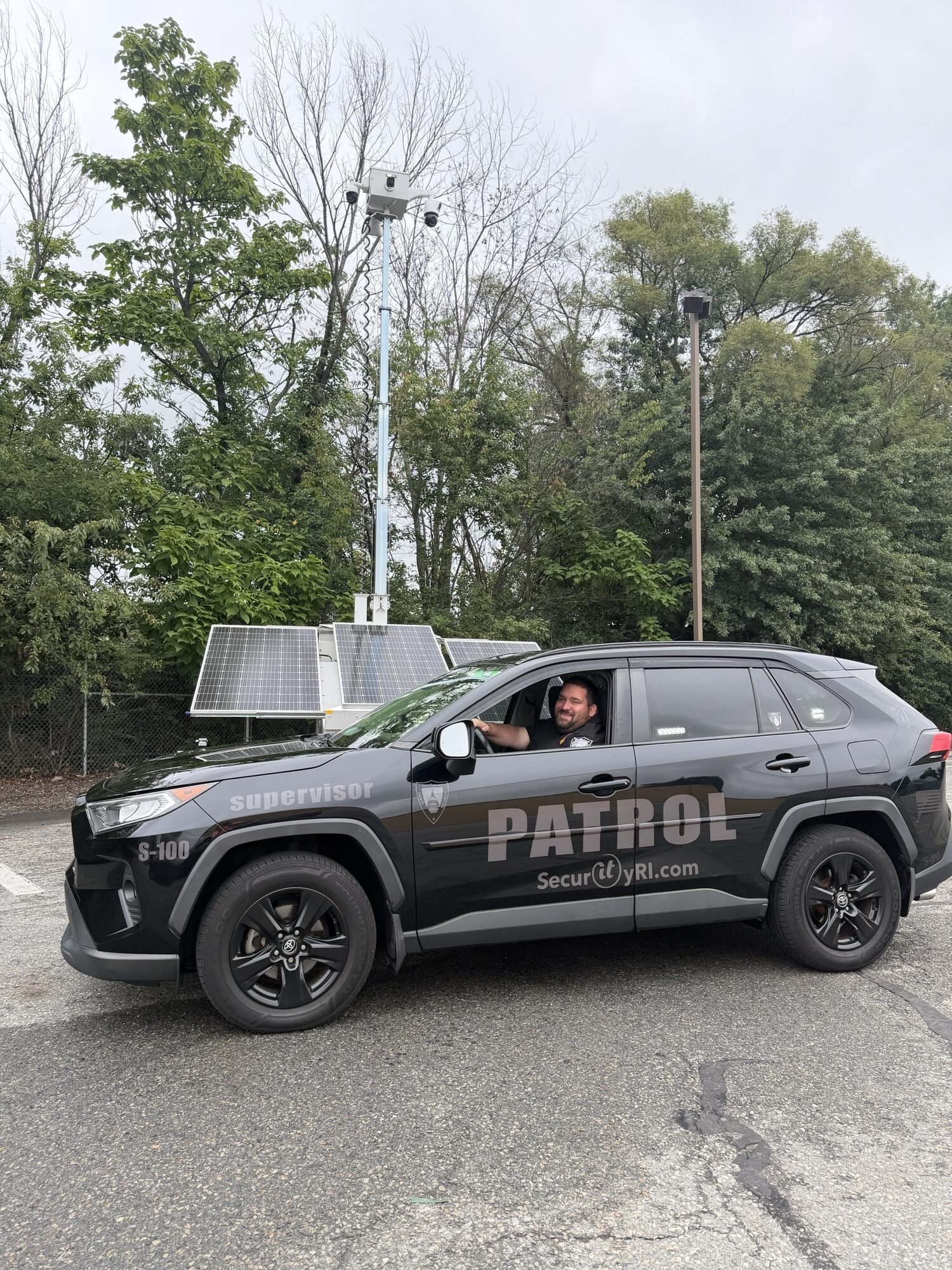
SecurityRI Lieutenant Vose patrolling a Rhode Island retail lot alongside a parked vehicle and mobile security trailer, tagging vehicles and enforcing lot rules
Human Element Lieutenant Vose working the lot in person, tagging vehicles and enforcing rules
How It Gets Set Up

Deploying Hybrid Coverage on a Retail Property

The same process applies to any Rhode Island retail lot dealing with dumping, loitering, or after-hours activity.

1

Walk the Lot and Flag the Problem Spots

We identify where dumping, loitering, or break-ins are actually happening, usually corners farthest from the entrance and out of sightlines.

2

Place the Trailer Where It Sees the Most

Solar power and LTE connectivity mean the trailer goes wherever the coverage gap is, not wherever there happens to be an outlet.

3

Schedule the Officer Around Real Activity

Rather than a generic walking loop, the officer’s rounds are built around when and where the property actually sees traffic and incidents.

4

Route AI Alerts to a Live Response

Motion and vehicle alerts go to the 24/7/365 monitoring center, and during staffed hours, directly to the officer on-site.

What This Solves

Problems This Approach Is Built to Address

Retail and shopping center lots in Rhode Island tend to run into the same handful of recurring issues.

Illegal Dumping

Recorded evidence of dumping as it happens, supporting enforcement and repeat-offender identification.

Loitering & Trespassing

Direct, in-person engagement that stops a pattern before it becomes a shopper complaint.

Vehicle Break-Ins

Continuous AI monitoring of parked vehicles, even during hours nobody is walking the lot.

Slow Incident Response

Alerts route straight to a live officer on-site instead of footage reviewed the next morning.

After-Hours Vandalism

Strobe lighting, audio deterrence, and recorded footage covering the hours the lot is unattended.

Shopper & Tenant Complaints

A visible, approachable officer that customers and tenants notice, not just a camera on a pole.

Common Questions

Retail Lot Security Questions, Answered

Can a mobile security trailer actually stop illegal dumping?

The trailer itself deters and records rather than physically intervening. What stops repeat dumping is the combination: AI detection identifies the pattern and captures usable footage, and that evidence supports enforcement, trespassing notices, or police reports against repeat offenders.

What does “tagging vehicles” mean in a retail lot?

Officers document vehicles that violate posted lot rules, overstaying, parking in restricted zones, or returning repeatedly during flagged incidents, and log them so property management has a documented record for enforcement or towing decisions.

Do I need both a guard and a mobile trailer, or just one?

It depends on the property, but most retail lots with after-hours vulnerability and daytime foot traffic get the most value from both. The trailer covers the hours nobody is scheduled on-site, and the officer covers the hours when direct, in-person enforcement matters most.

How fast can SecurityRI deploy this kind of coverage?

Mobile security trailers deploy same-day throughout Rhode Island, and officer scheduling typically starts within 24 to 48 hours of an assessment.

Does this work for shopping centers with multiple tenants?

Yes. Multi-tenant retail properties are one of the strongest fits for hybrid coverage, since the trailer covers shared lot areas around the clock while the officer coordinates enforcement across all tenants under one set of posted rules.

Get Started

Dealing With Dumping, Loitering, or Lot Activity?

Tell us what’s happening on your lot. Our security professionals will provide a customized coverage plan and competitive quote within 24 hours.

Call UsLocal: (401) 231-8130 | Toll Free: (888) 219-5296
Email Security Teampatrol@securityri.com
Corporate Headquarters58 Waterman Avenue, North Providence, RI 02911

Contact Us Today!

Schedule - FREE Security Assessment Today!

Ready to Talk Through Your Property?

Every lot is different. We’ll give you a straight answer on whether it calls for a trailer, an officer, or both, no canned pitch.
0
Read More
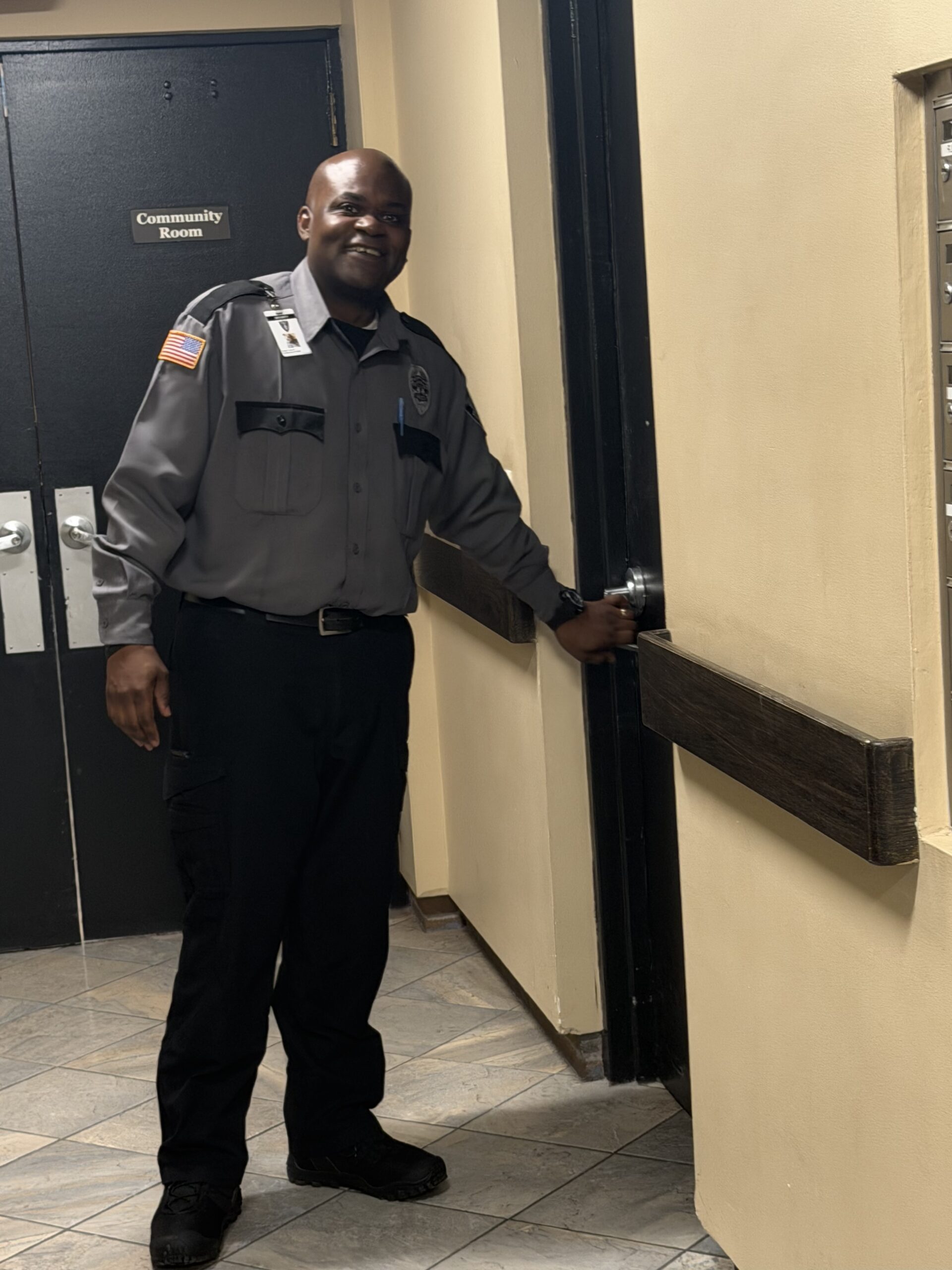
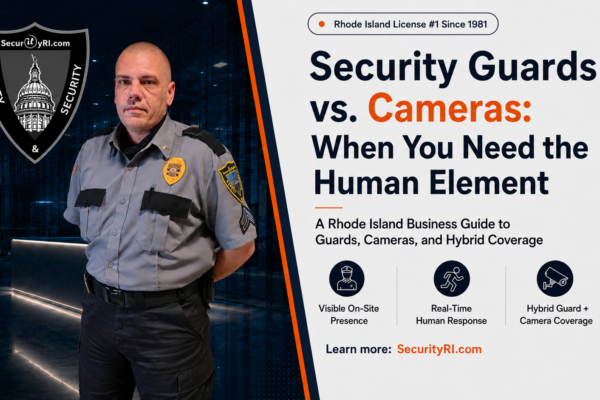
SecurityRI security officer representing the human element in a comparison of security guards and cameras for Rhode Island businesses, including on-site presence, real-time response, and hybrid guard and camera coverage.

Security Guards vs. Cameras in Rhode Island

Rhode Island License #1 Since 1981

Security Guards vs. Cameras: When You Need the Human Element

A Rhode Island Business Guide to Guards, Cameras, and Hybrid Coverage

Cameras can watch every angle of your property around the clock. They cannot walk a lobby, check an ID, or step between two people about to fight. Knowing where that line sits is the difference between a security plan that looks good on paper and one that actually protects your business.

SecurityRI security officer Guard
SecurityRI AI surveillance camera Camera
SecurityRI hybrid security coverage badge Hybrid
Why It Matters

What Only a Human Guard Can Do

Modern AI surveillance has come a long way. Today’s cameras include real-time alerts, facial recognition, and behavior analytics that flag unusual activity as it happens, not the next morning. For a Rhode Island warehouse, parking lot, or secondary entrance, that kind of constant, unblinking coverage is hard to beat, and it never calls in sick.

But a camera can only tell you something happened. A guard can stop it from happening, or respond while it is still happening. That distinction matters most in situations that require judgment, presence, or physical action.

  • Verifying identity and denying entry when something does not add up
  • De-escalating a tense situation before it turns physical
  • Physically removing a trespasser or stopping theft in progress
  • Giving employees and visitors real reassurance, not just a lens on a wall

None of this is an argument against cameras. It is an argument for knowing which problem you are actually trying to solve before you buy a solution.

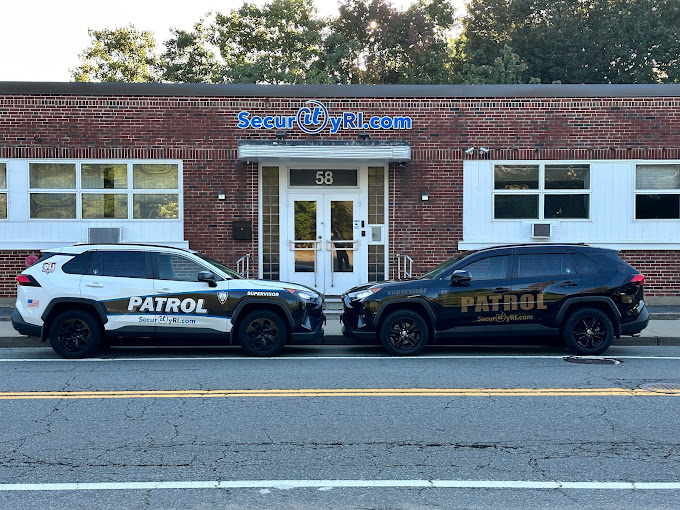
SecurityRI patrol vehicles serving Rhode Island businesses
Not Either / Or Most Rhode Island properties are best protected by the right mix, not one or the other
Side by Side

Guards, Cameras, or Hybrid: Where Each One Fits

Most Rhode Island businesses do not need to pick one and abandon the other. The right question is where each one fits your property.

Cameras Alone

Best for low-traffic areas, parking lots, and secondary entrances where constant coverage matters more than physical response.

  • Constant coverage, no staffing gaps
  • Real-time alerts and behavior analytics
  • Cannot physically intervene
  • Lowest cost option

Guards Alone

Best for lobbies, active sites, and high-risk hours where someone needs to verify, intervene, or respond in person.

  • Can verify identity and de-escalate
  • Physical presence and intervention
  • Limited to hours actually staffed
  • Higher cost for 24/7 coverage

Hybrid Coverage

What most SecurityRI clients end up choosing. Cameras and officers working as one program, not two separate products.

  • Cameras cover secondary areas and off-hours
  • Officers focus on entry points and peak-risk times
  • Often costs less than 24/7 guard staffing alone
  • Every alert paired with an officer response

What we’re seeing across Rhode Island: five years ago, most of our conversations with property owners started as either “we want a guard” or “we want cameras,” treated as competing options. That framing has mostly disappeared. AI camera systems got good enough to handle real-time alerting reliably, which freed officers up to spend their hours on the parts of the job a camera was never going to do anyway. The businesses getting the most value out of their security spend right now are the ones that stopped comparing guards to cameras and started asking what job each one is actually suited for.

Licensed & Insured

RI License #1 holder since 1981

24/7/365 Live Dispatch

A real person answers from North Providence around the clock

GPS Tracked Accountability

Verify coverage in real time, not just trust it

Rapid Deployment

Standard accounts live within 24 to 48 hours

Where It Matters Most

Scenarios Where the Human Element Matters Most

Ask yourself these questions about your property. If the answer points to a person, not a lens, that is where a guard belongs.

Security officer checking entry access at a Rhode Island facility
High Foot Traffic EntriesLobbies and front doors where the public comes and goes need someone who can verify who is walking in
SecurityRI mobile patrol officer covering a large Rhode Island property
Overnight & Low-Staff HoursUnstaffed hours are a strong candidate for camera coverage paired with mobile patrol checks
SecurityRI officers providing event security in Rhode Island
Corporate & Public EventsCrowd management, credential checks, and discreet presence at gatherings across Rhode Island
SecurityRI officer providing discreet protection at a private Rhode Island event
Executive & Workplace ProtectionSensitive terminations, leadership protection, and situations that may call for an armed response
SecurityRI guard shack at an industrial construction site in Rhode Island
Construction & Active Job SitesEquipment theft and unauthorized access are best deterred by a visible, physically present officer
SecurityRI officer on duty at a multi-tenant Rhode Island property
Multi-Tenant PropertiesCoordinating access across tenants often requires a person on-site to enforce building-wide protocols
Our Methodology

How We Actually Think Through This

01

Walk the Property First

Before recommending anything, we look at how people actually move through the space: entry points, sightlines, blind spots, and the hours nobody is around.

02

Separate the Risks From the Habits

A lot of security requests are inherited from whatever the last provider sold, not from an actual risk profile. We try to untangle the two before recommending anything.

03

Match the Tool to the Job

Cameras where constant coverage matters most, officers where judgment and physical presence matter most, and an honest answer if you need neither yet.

04

Revisit It as the Property Changes

A coverage plan that made sense a year ago may not fit today’s traffic, tenants, or incident history. We treat the mix as something to adjust, not set once and forget.

Still Weighing Guards vs. Cameras for Your Property?

Happy to walk through what we’re seeing on properties like yours, no pressure, no canned pitch. If it turns into an assessment, great. If it just answers your question, that’s fine too.

FAQ

Guards vs. Cameras Questions, Answered

Can cameras completely replace a security guard?

Cameras are excellent at recording and alerting, but they cannot physically intervene, verify a visitor’s identity, de-escalate a confrontation, or make a judgment call in the moment. For most Rhode Island properties with active foot traffic or higher risk exposure, cameras work best paired with a live officer rather than as a standalone replacement.

Is a hybrid security model more expensive than guards alone?

Not usually. A hybrid approach often costs less than staffing guards around the clock, because AI cameras can cover lower-risk hours or secondary entrances while officers focus on the times and areas that need a physical presence.

How do I know if my Rhode Island business needs a guard, cameras, or both?

It comes down to foot traffic, hours of operation, past incidents, and what needs to happen if something goes wrong. SecurityRI offers a free security assessment to evaluate your property and recommend the right mix.

Are SecurityRI’s AI cameras monitored by a person?

Yes. Our AI surveillance systems are configured in-house by our certified security technology team, with facial recognition and behavior analytics, and every alert is paired with an officer response rather than a notification nobody sees until the next day.

What does a hybrid security program cost compared to guards alone?

Pricing depends on your property, but hybrid programs typically cost less than staffing officers around the clock, since cameras absorb coverage during lower-risk hours while officers are scheduled where and when they matter most.

Talk It Through

Have a Property-Specific Question?

Every property is different, so if the general breakdown above did not quite answer your situation, reach out. We will give you a straight answer, whether or not it leads to an assessment.

Request a Free Security Assessment

Schedule - FREE Security Assessment Today!

0
Read More
How to Choose a Security Camera System in Rhode Island

How to Choose a Security Camera System in Rhode Island

In today’s increasingly connected world, securing your business with the right surveillance system is not just a luxury. It is a necessity. Whether you operate a warehouse in Warwick, a retail location in Providence, or a corporate office in Cranston, Rhode Island businesses face real-world risks every day. From theft and vandalism to liability issues and workplace safety, video surveillance plays a crucial role in proactive protection and peace of mind.

But not all security camera systems are created equal. And not all providers understand the unique demands of commercial security in Rhode Island’s varied environments.

At SecurityRI, we have spent years helping businesses design, install, and manage custom camera systems. We combine U.S.-manufactured equipment with AI analytics and professional IT-led installation. In this guide, we break down what you need to know to choose the right system for your operation, avoid costly missteps, and invest in security that grows with your business.

1. Know Your Environment: What Are You Securing and Why?

Every Rhode Island business has a different layout, customer flow, and risk profile. A logistics center in Quonset will have different surveillance needs than a downtown retail store or healthcare facility.

Start by identifying:

    • High-value zones such as loading docks, inventory storage, POS systems, and entry/exit doorsCamera locations

    • High-risk areas including back alleys, parking lots, poorly lit hallways, and restricted-access zones

    • Compliance-sensitive operations, like HIPAA-regulated environments or cannabis dispensaries

    • Business hours – do you need 24/7 monitoring or coverage only during operational windows?

By clearly outlining what you are protecting, when, and why, your provider can design a system tailored to your specific needs rather than a generic off-the-shelf kit.

SecurityRI offers complimentary site assessments across Rhode Island to help you define these needs before you commit to hardware or installation.

2. Key Features of a Modern Commercial Security Camera System

Once your business needs are mapped out, the next step is understanding what to look for in the camera system itself. There is no shortage of features on the market, but not all of them benefit your operation. The right system should offer a balance of image quality, reliability, and smart analytics, especially for commercial environments.

High-Definition Recording

For accurate evidence collection, facial recognition, and license plate capture, choose cameras with at least 1080p resolution. Many Rhode Island businesses are upgrading to 4K Ultra HD, especially for wide parking lots, large warehouse interiors, and entrance surveillance where image clarity matters most.

Night Vision and Low-Light Performance

A large percentage of criminal activity occurs after dark. Quality commercial cameras should offer infrared night vision or starlight sensors that deliver clean, detailed images even in complete darkness. This is especially important for exterior coverage and unlit areas behind your business.

Weatherproof Housing for Rhode Island Conditions

Rhode Island weather is unpredictable. Your outdoor cameras should be built with weather-rated housing (IP66 or higher) to resist rain, snow, salt air, and seasonal temperature swings.

Wide-Angle and PTZ (Pan-Tilt-Zoom) Lenses

Wide-angle lenses help reduce blind spots, while PTZ functionality allows cameras to zoom in or rotate in real time. These are ideal for large properties, parking garages, or any space that requires flexible surveillance.

Smart Motion Detection and AI Alerts

Basic motion detection is outdated. AI-powered systems can distinguish between a car, an animal, and a person. This reduces false alarms and ensures you are alerted only to relevant activity.

SecurityRI installs AI-powered camera systems with customizable alert zones, people and vehicle detection, and real-time cloud notifications. These smart features prevent problems rather than just recording them.

Cloud or Hybrid Storage

Commercial-grade systems should include NVR/DVR storage with secure cloud backup. Cloud integration allows for offsite video access, faster footage retrieval, and peace of mind knowing your video files are protected.

3. AI-Powered Surveillance: Smarter, Faster, and More Accurate

Artificial intelligence has transformed surveillance. Today’s smart cameras do more than record. They actively analyze footage and send alerts when something unusual happens.

AI-powered surveillance can:

    • Detect humans versus animals or vehicles

    • Recognize and log license platesCamera Security in Rhode Island

    • Identify loitering, line crossing, or restricted area access

    • Auto-track individuals across multiple cameras

    • Generate heat maps and traffic data for business insights

At SecurityRI, our systems use AI analytics to improve detection, reduce false alerts, and enhance client response. These solutions are especially effective when paired with live monitoring or mobile patrol services.

4. The Case for Professional Installation — Done by IT Experts

A camera system is only as good as its installation. Poor placement, exposed wiring, or unsecured networks can render even the most expensive system useless.

DIY kits are designed for residential use and often lack scalability, durability, and cybersecurity. Worse, many business owners only discover their system failed after a critical incident.

Here is what you get with professional installation from SecurityRI:

    • Strategic camera placement to eliminate blind spots and glare

    • Secure IT configuration with encrypted remote access and protected data streams

    • Integrated systems that work seamlessly with alarms, access control, or intercoms

    • Onsite training and support, so your staff knows how to use the system

    • Warranty protection and compliance documentation for regulated industries

We install systems that meet NDAA compliance, are sourced from trusted U.S. manufacturers, and are supported by Rhode Island’s top IT security professionals.

5. Plan for Growth: Scalable Systems Built to Expand

Your business may grow. Your camera system should too. Planning for scalability from the beginning ensures your investment does not become obsolete in a year.

Ensure the following:

    • Installing recorders that support more cameras than your initial setup

    • Using cloud licenses that can be scaled up or down as needed

    • Designing flexible layouts with future expansion in mind

    • Ensuring bandwidth and storage can handle high-resolution streams

    • Providing open-platform systems that integrate with future upgrades

6. Hybrid Security: Cameras, Monitoring, and Patrol Combined

Even the best surveillance system benefits from human support. A camera cannot chase down a trespasser or speak to a suspicious individual on-site.

This is why we offer hybrid security services that combine:

    • Ability to monitor

    • Incident verification and reporting

    • Unified service with a single point of contact

Certain properties require more than just passive surveillance or a single-layered security approach. Facilities like corporate campuses, warehouses, data centers, healthcare sites, or nonprofit shelters often face elevated risks – especially after hours. That’s where a hybrid security solution becomes not just ideal, but essential.

7. Commercial Security Checklist: Questions to Ask Before You Buy

Before choosing your provider, ask:

    • Are the cameras NDAA-compliant and made in the United States?

    • Will a certified security or IT professional install the system? Remember your system is connected to your IT network.

    • Is there AI detection with remote access?

    • Will the system scale as your business grows?

    • Is live monitoring or patrol available “if needed”?

    • Does the provider offer post-installation support?

Secure Your Business with Confidence

We have helped hundreds of Rhode Island businesses secure their properties with professional-grade security solutions.

Our clients trust us for:

    • Mobile patrol and live response options

    • High-definition, U.S.-made camera systems

    • AI-powered alerts and analytics

    • Professional IT-led installations

    • Cloud monitoring and remote access

Request a Free Security Assessment

Our experts will walk your site, assess your risks, and recommend a customized camera system. No pressure, no obligation.

Contact SecurityRI Today to schedule your free consultation.

Explore More Solutions:
Professional Security OfficersEvent Security by SecurityRI.
Mobile Patrols
Solar Security Trailers

0
Read More
Hybrid Security Event Protection by SecurityRI.com

How Hybrid Security Protects Seasonal Events in Rhode Island

Rhode Island’s Seasonal Events Are Growing – and So Are the Security Challenges

Rhode Island is home to some of New England’s most celebrated seasonal events. From the Narragansett Blessing of the Fleet to Providence’s iconic WaterFire, the Newport Jazz Festival, and countless parades, fairs, and holiday gatherings, these traditions bring thousands of people together each year.

While these events strengthen communities and boost local tourism, they also come with complex safety challenges. Large crowds, open venues, and unpredictable conditions require more than a single layer of protection. Event organizers need security solutions that are flexible, reliable, and cost-effective.

That is why hybrid security, the combination of trained professionals and advanced technology, has become one of the most effective approaches for managing seasonal event safety.

What is Hybrid Security?

Hybrid security is the integration of on-site security officers with modern tools such as AI surveillance cameras, solar-powered mobile security trailers, and mobile patrol units.

Instead of relying only on personnel or only on technology, hybrid security layers both, creating a system that is proactive, scalable, and adaptive. This model is particularly useful for seasonal events in Rhode Island, where activity is spread across large outdoor spaces that are often difficult to secure with a single approach.

Common Security Risks at Seasonal Events

Event organizers face challenges that can quickly become critical if left unaddressed. Some of the most common risks include:

  • Crowd Management Issues: Overcrowding, bottlenecks, and unruly behavior.
  • Theft and Vandalism: Opportunistic crimes that increase during large gatherings.
  • Access Point Vulnerabilities: Unauthorized entry at gates, restricted areas, or backstages.
  • Traffic and Parking Hazards: Congestion and unsafe crossings near busy venues.
  • Emergency Response Delays: Difficulty reaching those in need due to crowd density.

Hybrid security helps event organizers plan ahead, monitor effectively, and respond more quickly when issues arise.

How Hybrid Security Improves Event Safety

Uniformed Security Officers

On-site officers provide visible deterrence, enforce event rules, and assist with emergencies. Their presence reassures attendees while allowing for immediate human judgment and response.

Uniformed Security Officers | SecurityRI.com.

Solar-Powered Security Trailers and Mobile Patrols

Tools such as mobile security trailers and patrol vehicles extend coverage into areas that are otherwise difficult to monitor, including parking lots, street corners, and waterfront access points.

Security Guards in Providence, Rhode Island

Faster, More Targeted Responses

By combining data from technology with personnel in the field, potential issues can be identified earlier. Officers receive alerts and can respond quickly before a situation escalates.

How Hybrid Security Supports Rhode Island’s Seasonal Events

Hybrid security is not theoretical. It is already being applied across Rhode Island to keep large gatherings safe. Each event has unique characteristics, and the balance of technology and personnel is adjusted to fit the environment.

Event Security by SecurityRI.

Narragansett Blessing of the Fleet

Thousands of visitors attend this waterfront tradition every summer. With activity spread across docks, streets, and nearby parking areas, layered monitoring is essential. Hybrid security provides coverage by combining officers on the ground with technology tools such as mobile cameras and trailers that oversee hard-to-monitor spaces.

Narragansett Blessing of the Fleet security provided by SecurityRI.com.

Providence WaterFire

One of the state’s largest recurring public events, WaterFire draws crowds into downtown Providence. The open setting makes traditional security difficult to apply. Hybrid strategies such as surveillance trailers, mobile patrols, and uniformed officers help deter theft, manage crowd flow, and maintain emergency access.

Newport Jazz Festival

This festival spans multiple stages and entry points within a large outdoor venue. A hybrid model provides flexibility, with AI cameras monitoring perimeters and patrol officers focusing on crowd interaction and incident response.

Holiday Parades and Community Festivals

From Pawtucket’s Winter Wonderland to Cranston’s holiday parades, seasonal events bring families into busy public spaces. Hybrid security ensures safety by tracking crowd density, keeping parade routes open, and assisting with traffic management.

The takeaway: Hybrid security adapts to the unique needs of each event. By blending people and technology, it delivers wider coverage, quicker response, and stronger prevention than either approach could achieve alone.

Benefits for Event Organizers

Event organizers who adopt hybrid security gain several advantages:

  • Cost-Effective Protection: Balanced use of personnel and technology reduces expenses.
  • Regulatory Compliance: Helps meet city and state requirements for public safety.
  • Planning Insights: Surveillance data provides valuable information for future event logistics.
  • Community Confidence: A well-secured environment builds trust and improves attendee experiences.

Looking Ahead: The Future of Event Security in Rhode Island

As Rhode Island’s seasonal events continue to grow in popularity, so does the need for adaptive safety strategies. Relying only on manpower is expensive, and depending only on technology can leave gaps. Hybrid security represents a balanced model that is sustainable, flexible, and effective.

Organizers who plan ahead and embrace these solutions not only protect their attendees but also safeguard the reputation and long-term success of their events.

Conclusion

Seasonal events are a defining part of Rhode Island’s culture. Ensuring their success means protecting both the people who attend and the communities that host them. Hybrid security, the combination of security officers and modern technology, offers a proven way to meet those challenges.

By understanding how these strategies work in real-world scenarios, event organizers can better prepare for risks, manage budgets, and create safe, enjoyable experiences for everyone.

0
Read More