
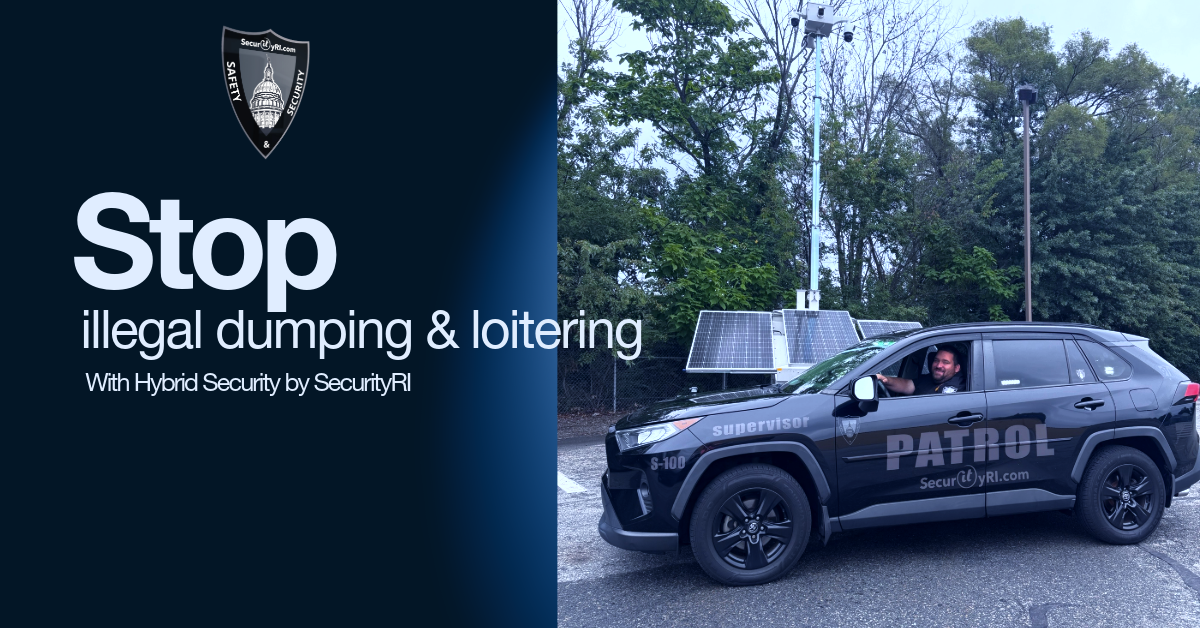
Stopping Illegal Dumping and Loitering at a Rhode Island Retail Lot
A Live Officer and an AI-Powered Trailer, Working the Same Lot
An AI-powered mobile security trailer records the lot around the clock. A live officer walks it during business hours, tagging vehicles, enforcing posted rules, and giving shoppers someone real to talk to. Here’s what that combination actually looks like in the field.
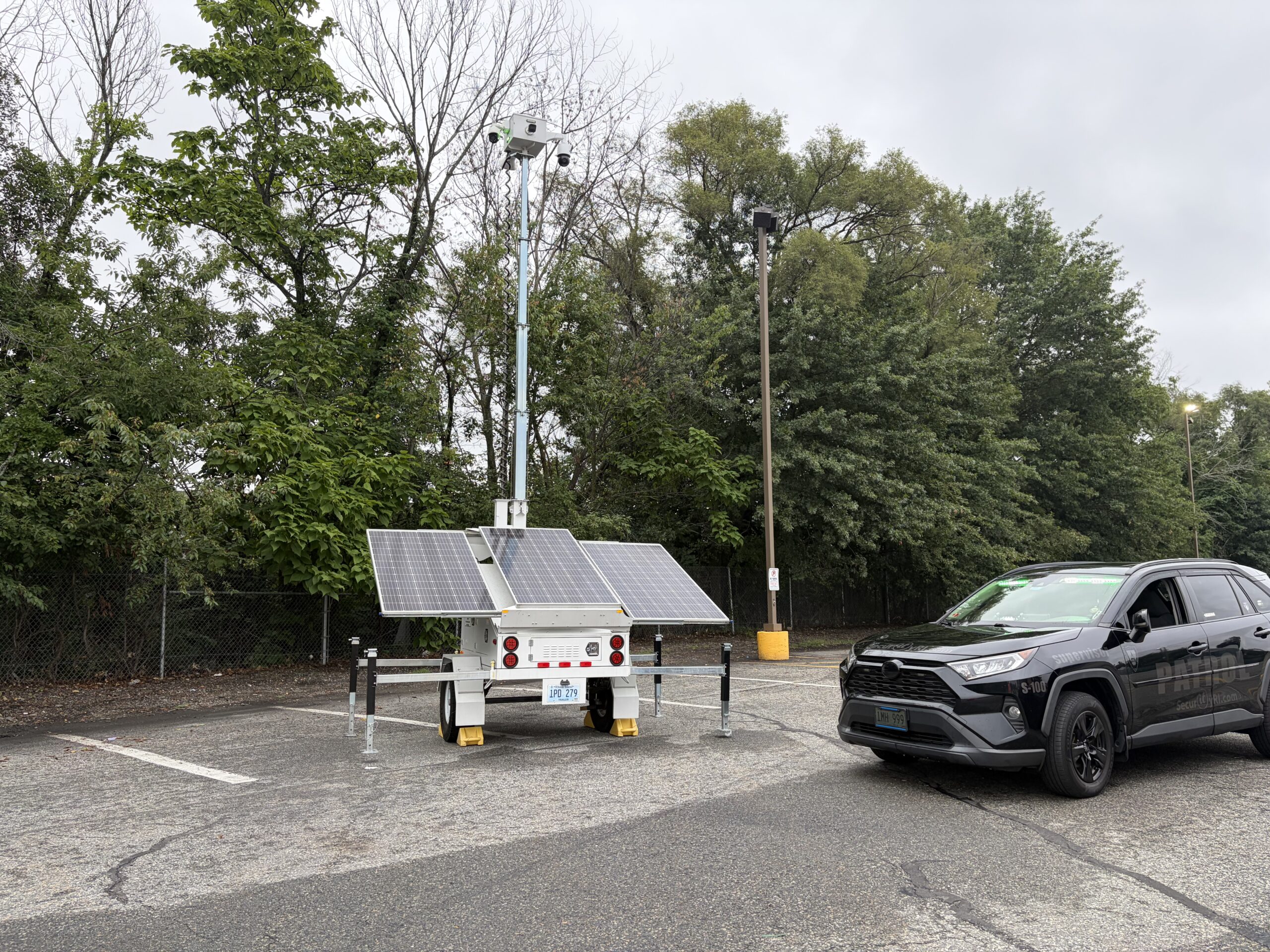
Quick answer: Stopping illegal dumping and loitering at a Rhode Island retail lot works best with two tools doing different jobs, not one tool doing both. An AI-powered mobile security trailer records the lot around the clock and captures usable evidence of dumping the moment it happens. A live officer works the lot during business hours to tag violating vehicles, break up loitering in person, and give shoppers someone real to talk to. Neither replaces the other.
AI Trailer
Continuous footage of the lot, day and night
Live Officer
On-site during business hours for direct enforcement
Vehicle Tagging
Officers flag and log vehicles that violate lot rules
Shopper Reassurance
A visible, approachable presence customers actually notice
What Hybrid Coverage Looks Like on This Lot
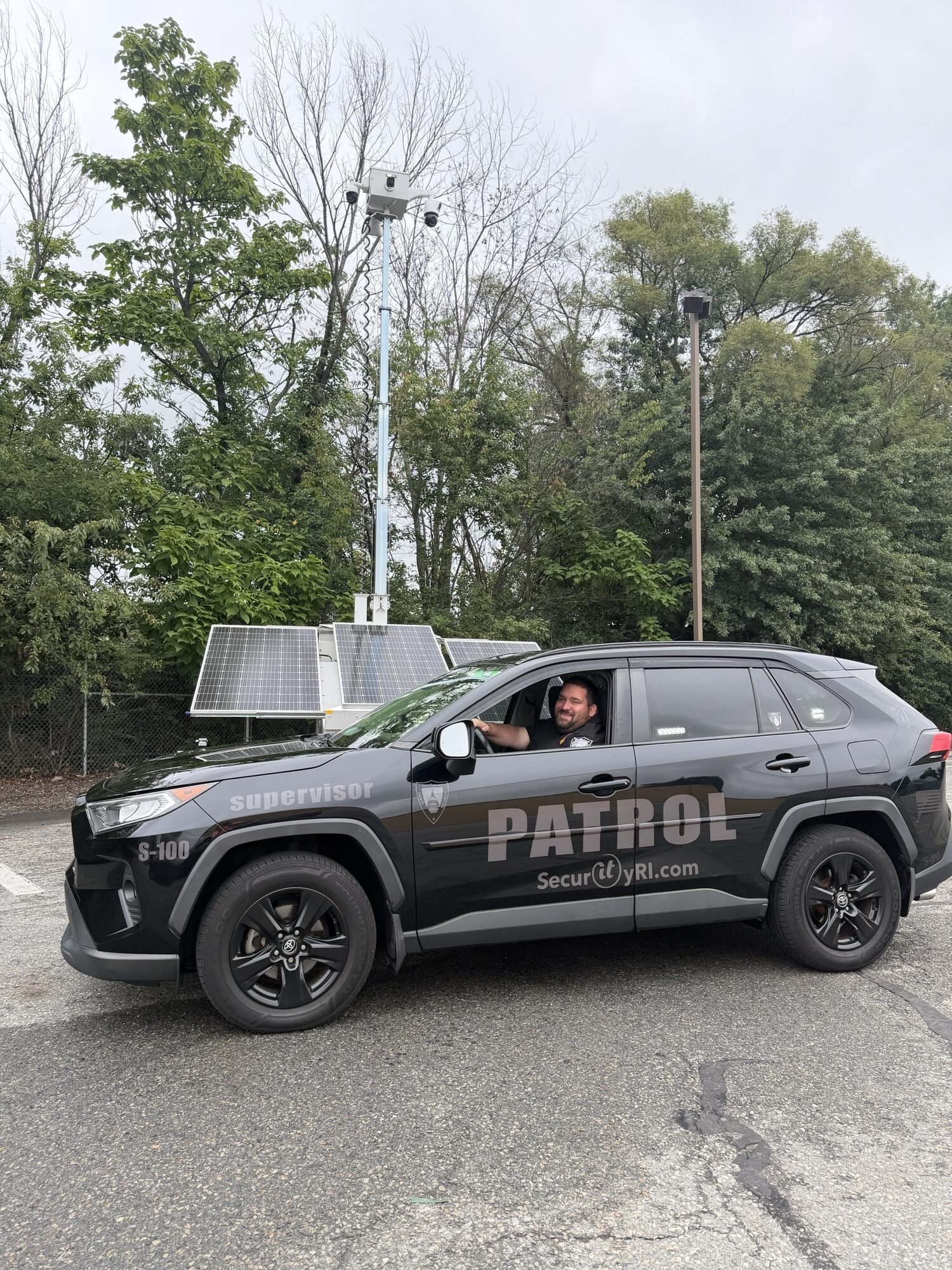
SecurityRI runs a solar-powered AI mobile trailer around the clock and pairs it with a live officer during operating hours. The two roles aren’t redundant, they’re covering different problems.
AI Motion & Vehicle Detection
Real-time detection across the full lot, including the hours nobody is scheduled to walk it.
- Motion, people, and vehicle detection
- Customizable alert zones
- After-hours coverage of blind corners
Illegal Dumping Deterrence
Recorded evidence of dumping as it happens, not discovered the next morning.
- Strobe lighting and audio deterrence
- Footage usable for trespassing notices
- Patterns flagged for repeat offenders
Direct Enforcement
Officers tag vehicles overstaying or violating posted lot rules, in person.
- Vehicle tagging and logging
- Documentation for towing decisions
- Enforcement of posted lot rules
Loitering Response
A person walking over and having a direct conversation, not just a recorded alert.
- In-person de-escalation
- Direct engagement, not just observation
- Prevents patterns from becoming habits
Real-Time Alert Routing
AI alerts route to SecurityRI’s monitoring center and, during staffed hours, straight to the officer on-site.
- 24/7/365 monitoring center
- Immediate on-site follow-up
- Coordinated response protocols
Visible Presence
Shoppers and staff notice a real officer on the lot, not just a camera pole.
- A face customers can approach
- Reassurance beyond signage
- Deters incidents before they start
Why Neither Piece Works as Well Alone
The same principle applies here as when comparing security guards versus cameras generally, but a retail lot makes the tradeoff concrete.
- The trailer’s AI surveillance system catches the 2 a.m. dumping run that no officer is scheduled to see
- Footage doesn’t resolve a car parked in a fire lane for three hours, a person walking over does
- The mobile trailer turns a generic patrol into a targeted one
- Officers work off what the trailer is already flagging, not a fixed walking loop
- Every alert is paired with an officer response, not a notification nobody sees until morning
Deploying Hybrid Coverage on a Retail Property
The same process applies to any Rhode Island retail lot dealing with dumping, loitering, or after-hours activity.
Walk the Lot and Flag the Problem Spots
We identify where dumping, loitering, or break-ins are actually happening, usually corners farthest from the entrance and out of sightlines.
Place the Trailer Where It Sees the Most
Solar power and LTE connectivity mean the trailer goes wherever the coverage gap is, not wherever there happens to be an outlet.
Schedule the Officer Around Real Activity
Rather than a generic walking loop, the officer’s rounds are built around when and where the property actually sees traffic and incidents.
Route AI Alerts to a Live Response
Motion and vehicle alerts go to the 24/7/365 monitoring center, and during staffed hours, directly to the officer on-site.
Problems This Approach Is Built to Address
Retail and shopping center lots in Rhode Island tend to run into the same handful of recurring issues.
Illegal Dumping
Recorded evidence of dumping as it happens, supporting enforcement and repeat-offender identification.
Loitering & Trespassing
Direct, in-person engagement that stops a pattern before it becomes a shopper complaint.
Vehicle Break-Ins
Continuous AI monitoring of parked vehicles, even during hours nobody is walking the lot.
Slow Incident Response
Alerts route straight to a live officer on-site instead of footage reviewed the next morning.
After-Hours Vandalism
Strobe lighting, audio deterrence, and recorded footage covering the hours the lot is unattended.
Shopper & Tenant Complaints
A visible, approachable officer that customers and tenants notice, not just a camera on a pole.
Retail Lot Security Questions, Answered
Can a mobile security trailer actually stop illegal dumping?
The trailer itself deters and records rather than physically intervening. What stops repeat dumping is the combination: AI detection identifies the pattern and captures usable footage, and that evidence supports enforcement, trespassing notices, or police reports against repeat offenders.
What does “tagging vehicles” mean in a retail lot?
Officers document vehicles that violate posted lot rules, overstaying, parking in restricted zones, or returning repeatedly during flagged incidents, and log them so property management has a documented record for enforcement or towing decisions.
Do I need both a guard and a mobile trailer, or just one?
It depends on the property, but most retail lots with after-hours vulnerability and daytime foot traffic get the most value from both. The trailer covers the hours nobody is scheduled on-site, and the officer covers the hours when direct, in-person enforcement matters most.
How fast can SecurityRI deploy this kind of coverage?
Mobile security trailers deploy same-day throughout Rhode Island, and officer scheduling typically starts within 24 to 48 hours of an assessment.
Does this work for shopping centers with multiple tenants?
Yes. Multi-tenant retail properties are one of the strongest fits for hybrid coverage, since the trailer covers shared lot areas around the clock while the officer coordinates enforcement across all tenants under one set of posted rules.
Dealing With Dumping, Loitering, or Lot Activity?
Tell us what’s happening on your lot. Our security professionals will provide a customized coverage plan and competitive quote within 24 hours.
Contact Us Today!
Ready to Talk Through Your Property?
Every lot is different. We’ll give you a straight answer on whether it calls for a trailer, an officer, or both, no canned pitch.
